Application of Disc Stack Centrifuges in the Mineral Oil Industry
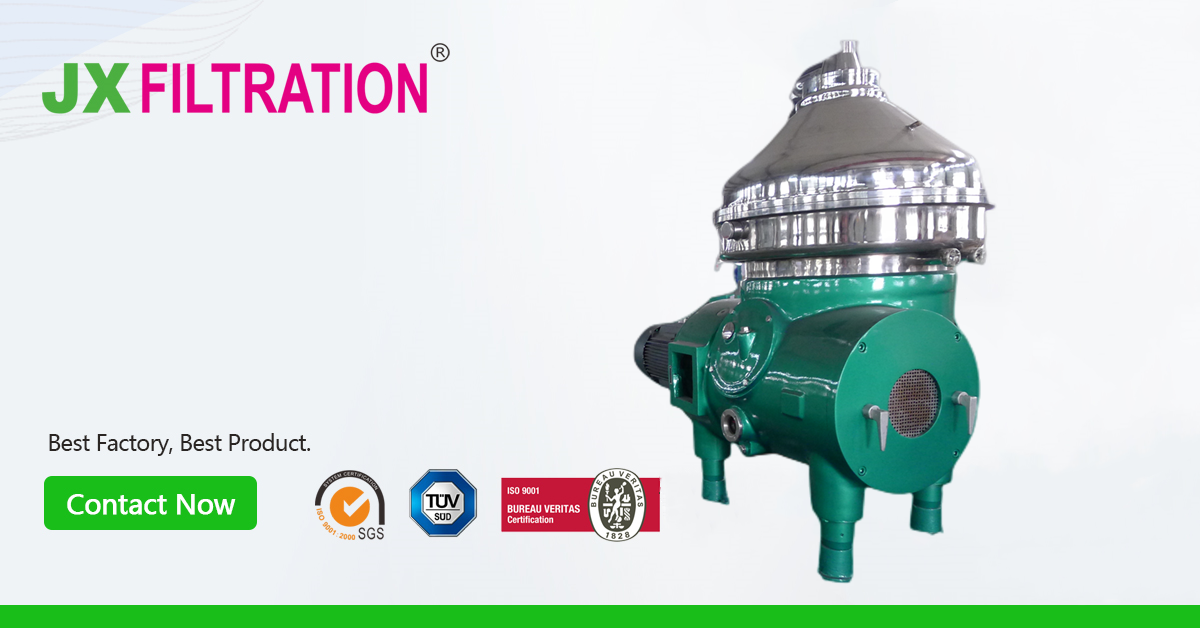
To address these challenges, the disc stack centrifuge has proven to be a highly effective separation and clarification device. This type of centrifuge belongs to the sedimentation category and is particularly efficient in separating difficult mixtures, such as viscous liquids containing fine solid particles or emulsions composed of liquids with similar densities. As a result, it has become one of the most widely used separation devices in industrial processes.
Working Principle
The disc stack centrifuge features a rotating drum (bowl) that contains a stack of conical discs. The separation process relies on centrifugal sedimentation to treat emulsions and low‑concentration suspensions. The material enters the drum through a central inlet pipe, flows to the base of the bowl, and is then directed outward through distribution holes located beneath the disc stack.
Under the influence of centrifugal force, heavier solid particles settle on the inner wall of the drum, forming a sludge layer. The lighter liquid phase moves along the outer surfaces of the conical discs toward the center of the drum and is discharged via the light‑phase outlet using a centripetal pump at the top. Meanwhile, the heavier liquid phase flows along the inner surfaces of the conical discs toward the drum wall and exits through the heavy‑phase centripetal pump.
Key Advantages
-
Efficient separation of fine solid particles from viscous oils.
-
Effective breaking of oil‑water emulsions, especially when the two liquids have similar densities.
-
Continuous operation, making it suitable for large‑scale industrial applications.
-
Minimal maintenance requirements when operated correctly.
Important Operational Notes
Before using a disc stack centrifuge, all components should be carefully inspected and adjusted by trained personnel. It is essential to confirm that the equipment is in proper working condition before beginning material separation. This ensures both operational safety and stable performance, while helping to avoid process interruptions or equipment malfunctions.
Conclusion
In the mineral oil industry, disc stack centrifuges play a vital role in pollution control and product purification. By efficiently removing solid contaminants and separating oil‑water mixtures, they help reduce environmental impact and improve the quality of fuels, lubricants, and other oil‑based products. For any application involving difficult‑to‑separate mineral oil mixtures, the disc stack centrifuge remains a reliable and highly effective solution.
-
Any requirements, contact us now!
Grace
Email: grace@filtrationchina.com
Mobile/Whatsapp/WeChat: +86 17269571160