What Are the Application and Efficiency of Screw Press in Sludge Dewatering?
In municipal and industrial wastewater treatment, sludge dewatering is a critical step to reduce volume, lower disposal costs, and facilitate resource recovery. Among various dewatering technologies, the screw press has gained widespread acceptance due to its energy efficiency, simplicity, and continuous operation.
Working Principle
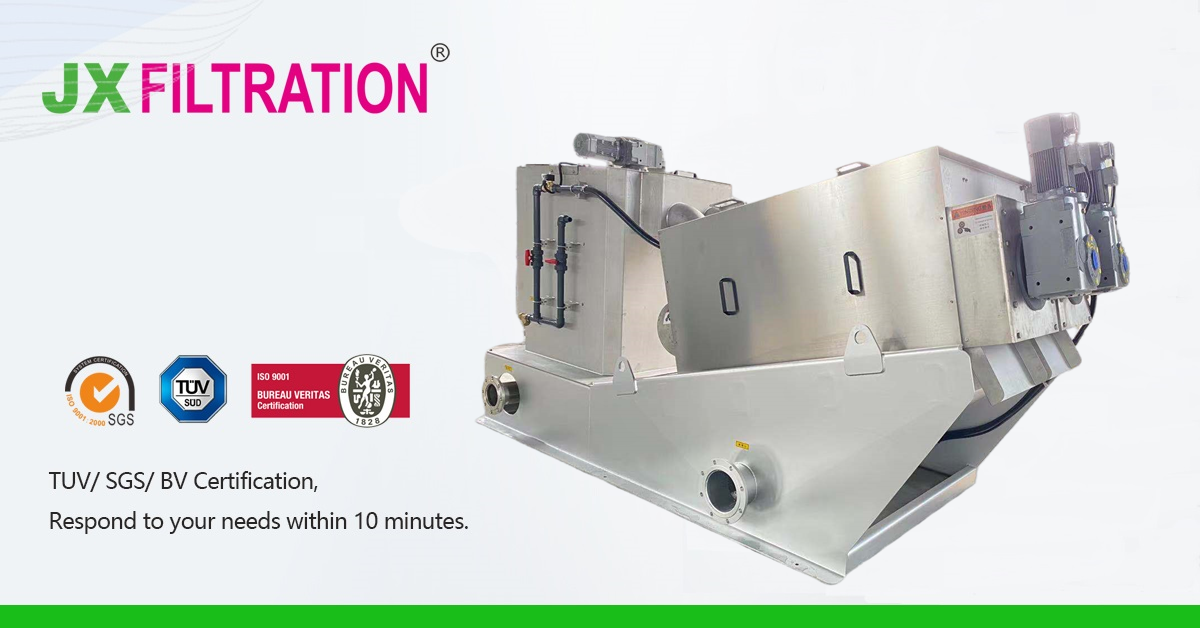
A screw press consists of a rotating helical screw enclosed within a cylindrical screen basket or a set of pressure plates. Sludge is fed into one end, and as the screw rotates, it conveys the material forward. The gradual reduction in pitch or an increasing shaft diameter compresses the sludge. This mechanical pressure forces free water through the screen, while the dewatered solids (cake) exit at the discharge end. Unlike centrifuges, screw presses operate at low rotational speeds (typically 0.5–5 rpm), resulting in minimal noise and vibration.
Key Applications
Screw presses are widely used for dewatering:
-
Municipal sewage sludge – both primary and waste-activated sludge.
-
Industrial sludges – from food processing, paper mills, breweries, and textile plants.
-
Manure and agricultural waste – producing stackable solids for fertilizer or bedding.
-
Biogas digestate – reducing transport volume and improving nutrient management.
Efficiency Advantages
The screw press offers several efficiency-related benefits:
-
Low energy consumption – power usage is only 0.05–0.1 kWh per kilogram of dry solids, significantly lower than decanter centrifuges.
-
High capture rate – over 95% of suspended solids can be retained, producing a clear filtrate.
-
Moderate cake dryness – typical outlet solids content ranges from 15–30% for organic sludges and up to 40–50% for fibrous materials. Although lower than a filter press, this dryness is sufficient for many transport and incineration scenarios.
-
Minimal wash water – self-cleaning screw designs reduce cleaning frequency, saving water and labor.
-
Low maintenance – slow speed means less wear on mechanical parts; polymer-assisted conditioning further improves dewatering.
Limitations
Screw presses may not achieve the same high cake solids as recessed plate filter presses. They also require a well-conditioned sludge (usually with polymer flocculants) to prevent screen blinding.
Conclusion
For facilities prioritizing operational simplicity, low energy footprint, and reliable continuous dewatering, the screw press is an efficient and cost-effective solution. Its role in sustainable sludge management continues to expand.
Any requirements, contact us now!
Grace
Email: grace@filtrationchina.com
Mobile/Whatsapp/WeChat: +86 17269571160