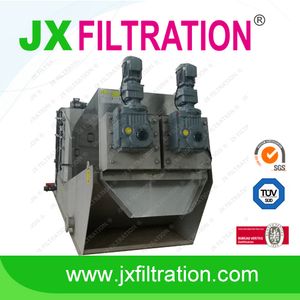
202 Sludge Dewatering Press for Canadian Cheese Plant
📍 Canada · 🧀 Dairy Food Processing · 📦 Sludge Dewatering Press
Every industrial dewatering project starts with rough estimates, but the best solutions come from refining details step by step. This case from a Canadian cheese factory shows how we adjusted our proposal closely to the client’s actual process and delivered a tailored, cost-effective setup.
Initial Project Overview
We first learned about the project through a kickoff meeting. The client runs a cheese production facility, with sludge pre-thickened before the dewatering stage.
Initial figures estimated 50m³ of sludge per day, with solids concentration ranging from 2% to 5%. The client originally expected 5 tons of 15% solids cake, with a daily runtime of no more than 5 hours, powered by 575V 60Hz 3-phase electricity.
Based on these parameters, we initially recommended two units of Model 403 sludge dewatering press in 304 stainless steel.
Refined Data, Optimized Recommendation
Soon after, the client shared more precise operational data:
- Upstream pre-thickening equipment is already in place, so only the dewatering press was required — no polymer dosing system needed.
- Daily sludge feed: ~50 tons, 2%–5% solids content
- Total daily dry solids: 1.5–2 tons
- Target cake output: 8–10 tons at 18% solids
- Planned daily runtime: 12–16 hours
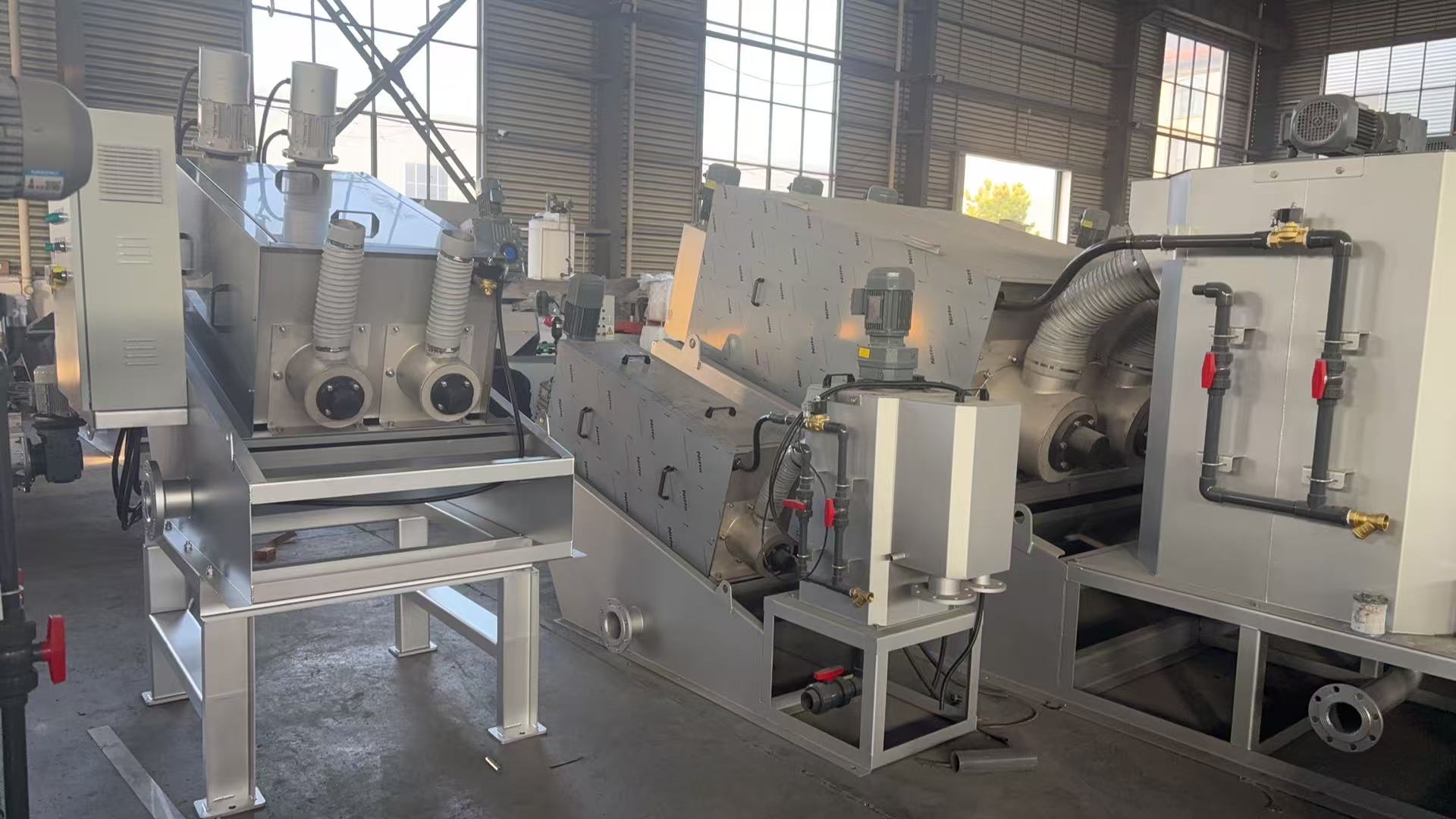
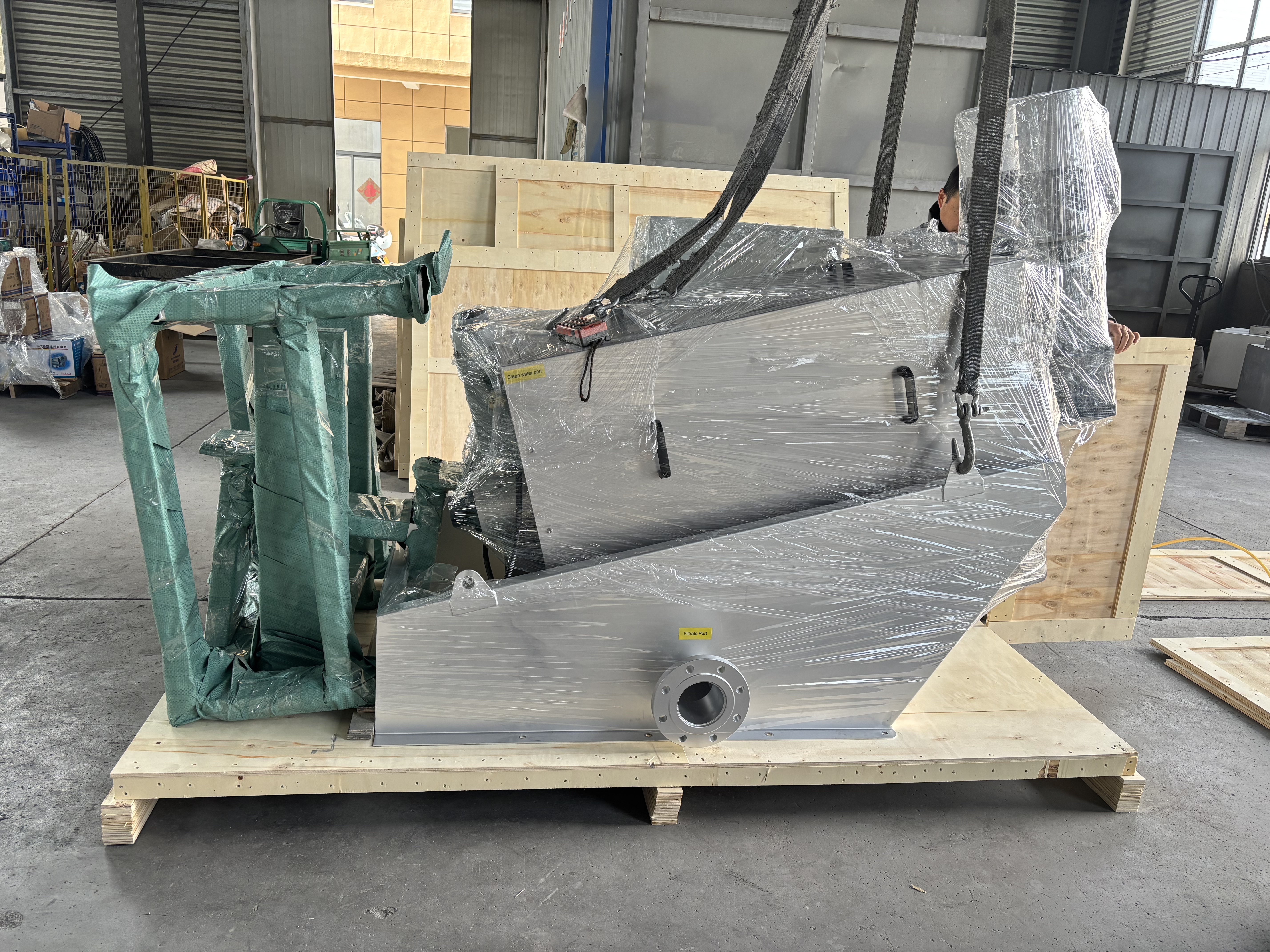
With extended daily runtime, a single unit was fully capable of handling the load, and smaller models also became viable options. We presented Model 201 and Model 202 for comparison. After evaluation, the client finalized the Model 202 sludge dewatering press in SS304.
Customization & Professional Guidance
Screw Conveyor for Cake Transfer
The client needed to move dewatered cake from the press outlet to an outdoor storage bin. Based on the required conveying distance, we matched a dedicated screw conveyor for seamless, enclosed discharge.
Rotary Drum Screen Selection Advice
The client also requested a quote for an Externally Fed Rotary Drum Screen. We provided honest technical advice: an Internally Fed Rotary Drum Screen delivers far better separation performance for their dairy sludge, and we recommended this option instead.
Cost-optimized Structure Adjustment
Our standard press is equipped with a top mixing system — it homogenizes incoming sludge and blocks hard impurities from entering the squeezing chamber. Since the client did not require this function, we removed the module to cut unnecessary costs.
Interface Confirmation
We supplied complete equipment drawings to confirm inlet position, flange specifications and all connection details before manufacturing.
Project Outcome
The client confirmed the order in a short decision cycle: one Model 202 SS304 sludge dewatering press plus one matched screw conveyor.
The final solution fits perfectly with their pre-thickened process, meets the 18% solids cake target, and eliminates redundant components to keep the budget efficient.
Full Project Workflow
- Kickoff meeting to collect initial sludge and site data
- Deliver preliminary model and configuration recommendation
- Adjust proposal based on refined operational parameters
- Provide professional guidance on auxiliary equipment selection
- Customize structure and confirm all interfaces via drawings
- Order confirmation and production launch
If you operate a dairy or food processing plant with pre-thickened sludge and need a properly sized, customizable dewatering solution, we can help you find the most cost-effective configuration for your runtime and output targets.
📢 Any requirements? Contact us now!💼 Grace📩 Email: grace@filtrationchina.com📱 Mobile / WhatsApp / WeChat: +86 17269571160💡 We're here to help – reach out anytime! ✨